A week in the Auvergne (L'Auvergne) 
Friends! Here I am again to start the trip we did the first week of September. We were in the Auvergne, Massif Central of France, land of volcanoes. The country stretches from the chain of Puys to the mountains of Cantal. This immense territory composed landscapes, flora and fauna extraordinary owes its strong identity to a whole rural society that has known preserve their knowledge and culture. Aware of the richness and fragility of its environment, its inhabitants, according to the Regional Council of Auvergne, founded the "Regional Natural Park of the Volcanoes of Auvergne" on October 25, 1977. It is the largest regional park in Europe. Is the domain of volcanoes and crater lakes, farms altitude and cheese, as it has 4 cheeses with denomination of origin: Fourme d'Ambert, the Cantal, Salers, Bleu d ' Auvergne and Saint-Nectaire. The Cantal and Salers and were made 2,000 years ago.
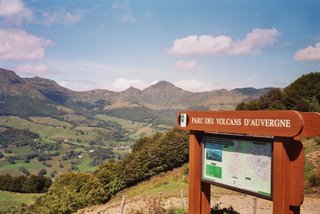
culminating summits over 1,800. and possesses one of the purest air Europe. This natural park covers an area of \u200b\u200b395,000 hectares, is 120 km. from North to South, 4 volcanic massifs (Monts Domes, Monts Dore and Mont Cézallier Cantal) and its altitude varies between 400 and 1.886m.
This trip we had scheduled for late April last year. We had the bad luck of a cold front from Siberia, we made over and all the mountain passes were closed, forcing us to direct our steps (and our car) to the Camargue.
This time, when we leave on September 2, we would also make bad weather, since we started the trip with squall. Throughout the month of August, rain, fog and freezing temperatures were common in the Auvergne. However, the time we had was wonderful, mid-summer. Well, without further ado, let's go directly to the trip. Here I present the route we did:
.- Barcelona Day 1 - Saint Flour - Chaudes-Aigues -
Murat Murat Day 2 .- - Puy Mary - Salers - Tournemire - Vic-sur-Cère -
Murat Murat Day 3 .- - Cheylade - Riom-ès-Montagnes - Lanobre - Val Castle - The Bourboule
Day 4 .- The Bourboule - Le Mont Doré - Puy de Sancy - Lac Chambon - Lac Pavin - The Bourboule
Day 5 .- The Bourboule - Saint Nectaire - Puy-de-Dôme
Day 6 .- Saint Nectaire - Saint Floret - Vieille Brioude - Le-Puy-en-Velay
Day 7 .- Le-Puy-en-Velay - Barcelona.
Day .- Barcelona - Saint-Flour, 503 km. (A-9) (A-75)
Saint-Flour - Chaudes-Aigues, 30 km (D-921)
Chaudes-Aigues - Murat, 59 km. (D-921) (D-926)
Leaving
soon as usual. We passed the border, continue on the A-9 until you reach Exit 34 (Millau, Clermont Ferrand), we paid € 9.80 in the Gare d'Agde toll and take the right fork which puts Agde. We few km. by a semi-local road, we passed over the motorway following the signs Clermont Ferrand-Millau. Then we will meet with the Méridienne (A-75). Now begins a piece of highway where the views are spectacular. On the left, St-Guillem-le-Desert, perched on a hill. Later Lodève, beautiful walled town. You can go to visit. A little later, while we are driving, the view Cirque de Navacelles precious few miles with us. The highway goes up, we are at 765 meters. At exit 49 is Le Caylar. You can see a medieval castle, and if we
Leftover time and we have not seen before, you can get to the Couvertoirade.
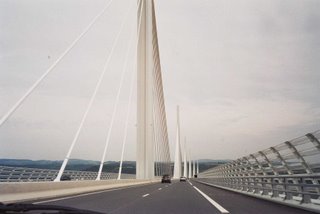
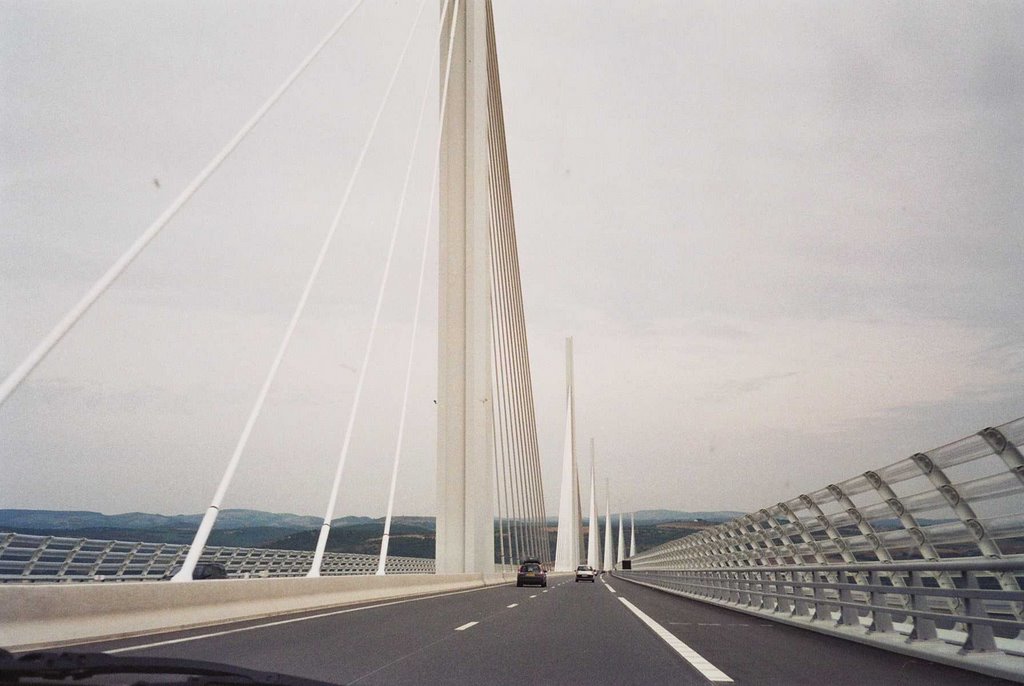
We are in the National Park of Grands Causses. We passed the Viaduc de Millau, a masterpiece of modern engineering. The toll is Viaduc (5.10 €), but it's worth crossing. Note that you can not stop to take pictures. A few meters you will find a gazebo, well signposted, from where you can take beautiful prospects. Although much less spectacular than the Millau viaduct is the one after the other showing a beautiful valleys. We are going through Aumont-Aubrac, 1,000 m. altitude. It is a picturesque village. At exit 39, the viewpoint of Marvejols where you can contemplate the majesty of the landscape. To put gas or coffee, you can go into a "village stage." Have been previously marked on the highway and are always small and charming villages where people receive you as if you were "home." At exit 35 is Aumont-Aubrac. If you visit ye \u200b\u200bwill not disappointed. However, if you go to a gradual and crowded area full of shops, there is another as "L'air de la Lozère" (Exit 32). In this area you have to queue to get petrol, to have a coffee and go to the toilet. Best leave in a "village étape" and rest of the madding crowd ...
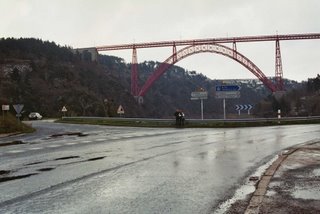
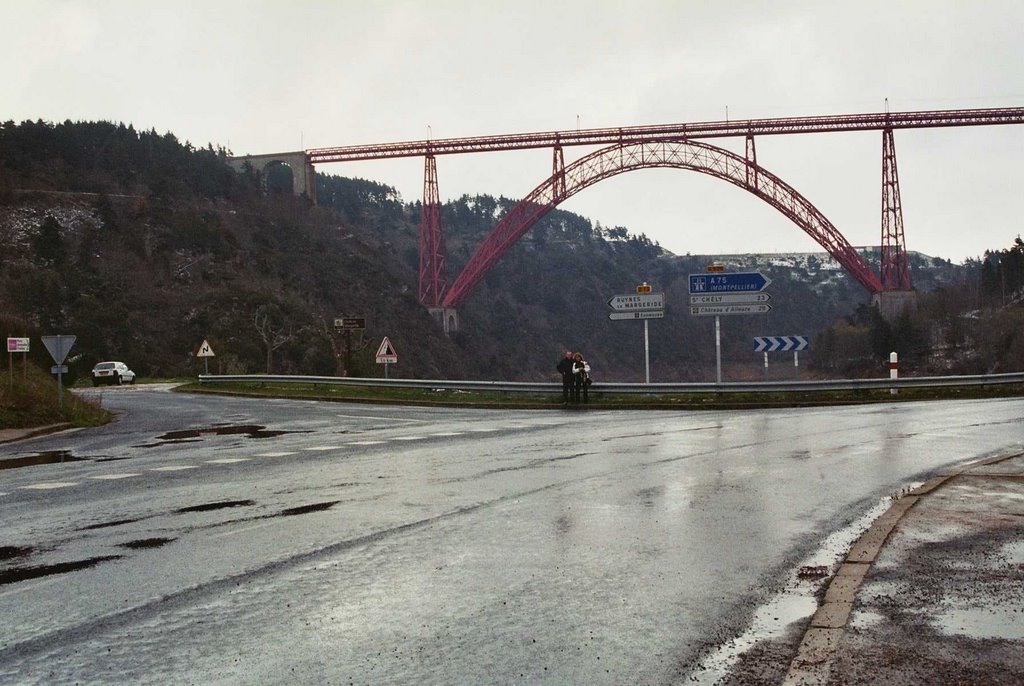
We are in the Cantal region. We stopped in the area of \u200b\u200bGarabit (km. 103), against one of the most beautiful views of the Massif Central, to admire the Viaduc important. In this area you can visit the Maison de Cantal. It was in 1878 when Leon Boyer, an engineer born in Lozère, conceived the project of crossing the Central Mazizo Béziers laying a railway line to Paris. This path was a "black spot": a "gorge" deep 564 m. wide and 125 m. height, called Garabit. Boyer devised a metal bridge with a single parabolic arch, capable of supporting the weight of trains. The construction of this great engineering work was entrusted to the young engineer Gustave Eiffel, already known for its projects of steel structures. It began in 1880. In 1882 they started to get the metal towers. It was completed in 1884. Experience in G
Arabit allowed build in 1889, the Eiffel Tower, his masterpiece. Today, the V
Garabit iaduc is a work of art,
visited every year by thousands of people.
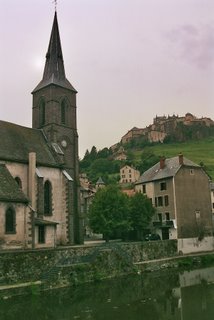
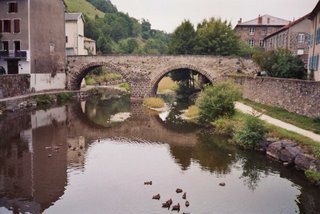
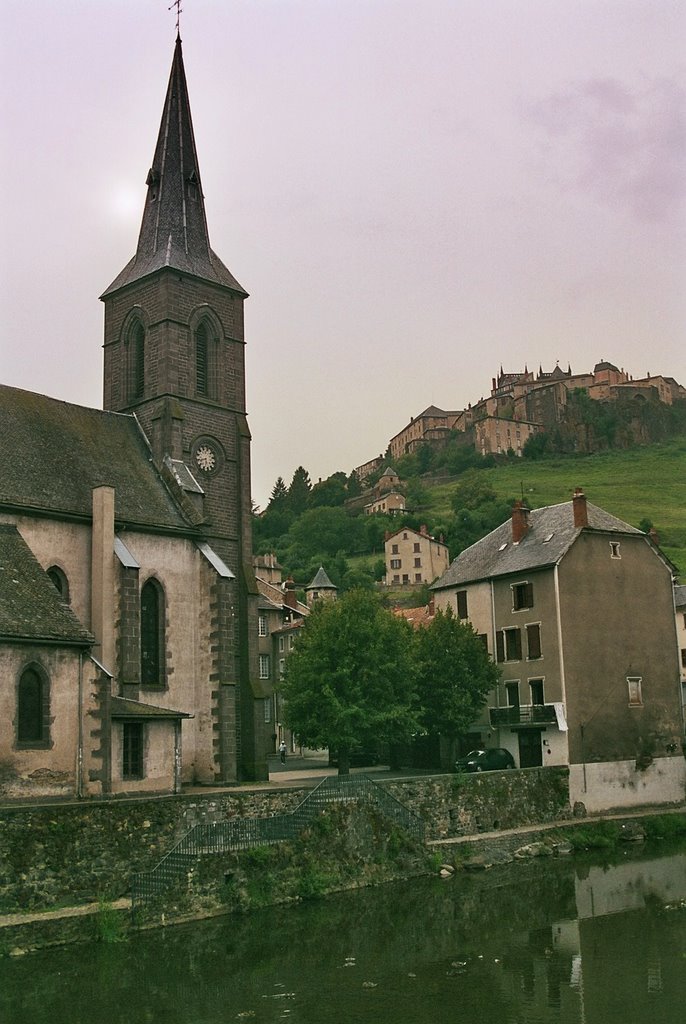
reach Saint-Flour. Located at the tip of a basaltic rock, dominates the situation big spaces of Cantal. Medieval city, proclaimed religious capital of l'Haute Auvergne in the year 1317 was, essentially, a commercial city in the middle ages known for their important fairs. It was also called City of Bishops. We entered the lower part of the city. From the Pont-Vieux, which sits on the river Ander, you can admire the top, with two huge towers of the Cathedral of San Pedro who stand defiant as a huge strength. The cathedral Gothic amazing simplicity, is built of basalt, black and hard stone product of volcanoes. A black Christ, only in France, you can admire inside.
The relics of St. Flour are jealously guarded in a bronze coffin.
All around, many Gothic buildings of the end of the Middle Ages and the Renaissance golden age testify to the importance of this city. Basalt sculptures crowned squares and corners and you do not stop to admire the richness of its buildings and the careful preservation of streets and buildings.
worth seeing this city at night, since the right lighting is immersed in a medieval city unusual splendor.
Behind the Tourist Office in Plaza de la Catedral, there is a viewpoint from which you can admire the river and the entire lower part of the city.
We ate very well in a Hotel-Restaurant uptown. In the dining room, the windows offered a view
 vertigo
 beautiful.
As it is still early, we decided coger la carretera D-921 que, con solo 30 km. nos va a llevar a Chaudes-Aigües, ciudad termal, a una altitud de 750 m., de nombre muy adecuado: Sus aguas manan a una temperatura de 82ºC, siendo las más calientes de Europa. La ciudad está situada en una inmensa y magnífica altiplanicie, de verde intenso, con muchos "mazucs" (granjas de altura donde se fabrican quesos) y dispone de la red de calefacción urbana más antigua del mundo (año 1.332). 36 fuentes se cuidan de canalizar el agua casi hirviendo para llegar a cada casa. Antaño la gente acudía a la Fuente de Par para lavar la ropa, hervir huevos, desplumar aves e, incluso, para lavar cerdos. Hay que destacar, también, las propiedades curativas of these waters, whose reputation goes back to the beginning of the Christian era. At that time the town was called Aquae Heat.
must-see is the Museum of the geothermal and thermal. This museum, unique in France, which shows the origin of the hot channels and their subsequent use.
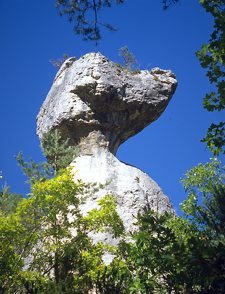
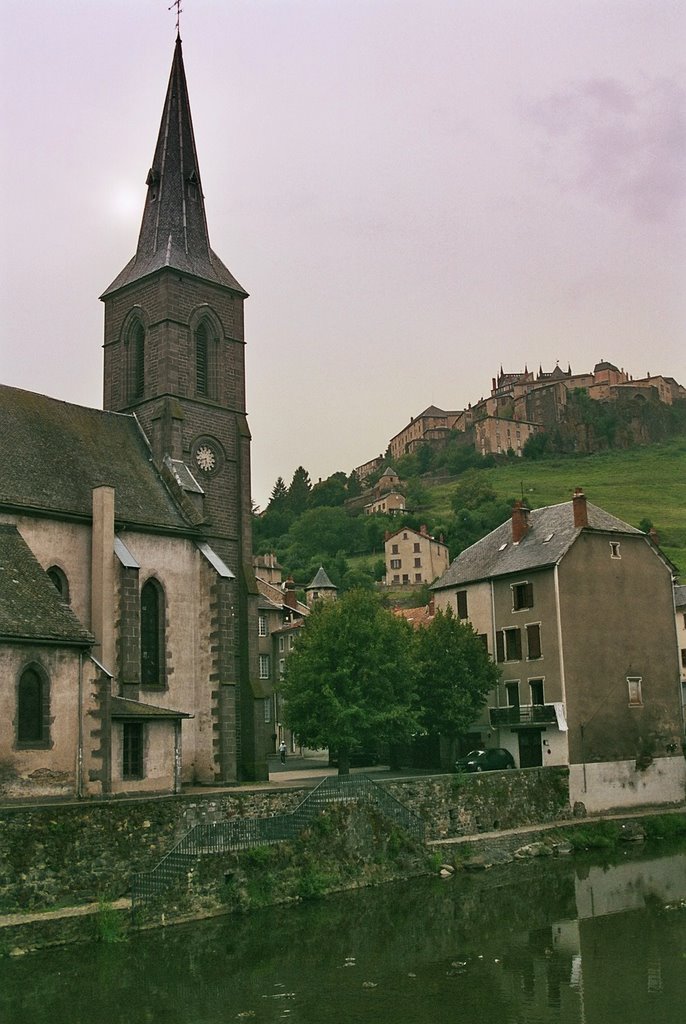
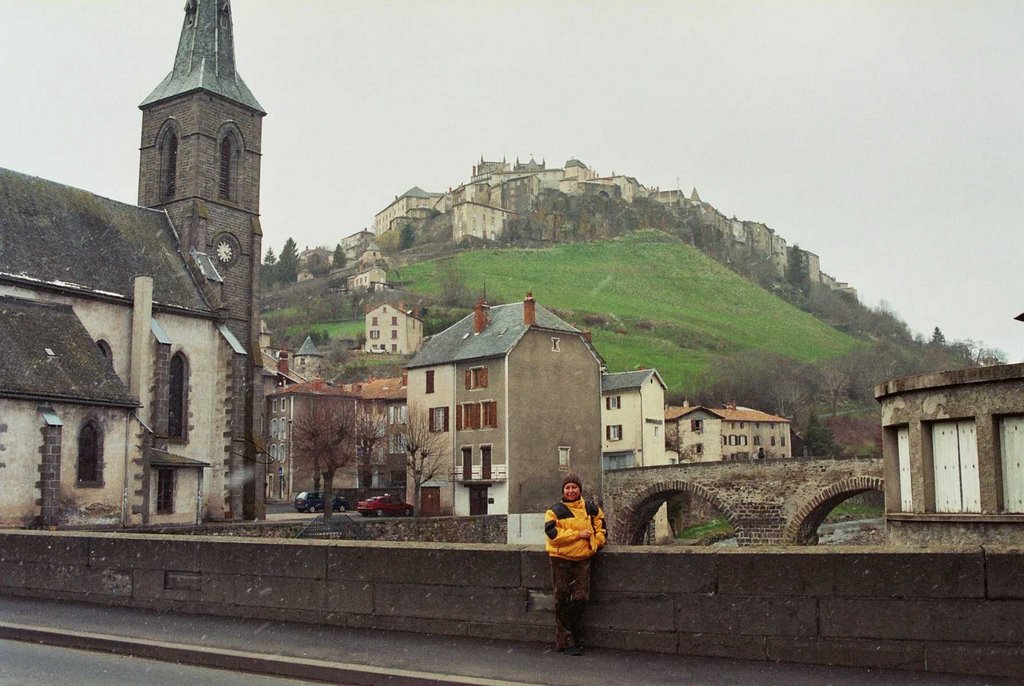
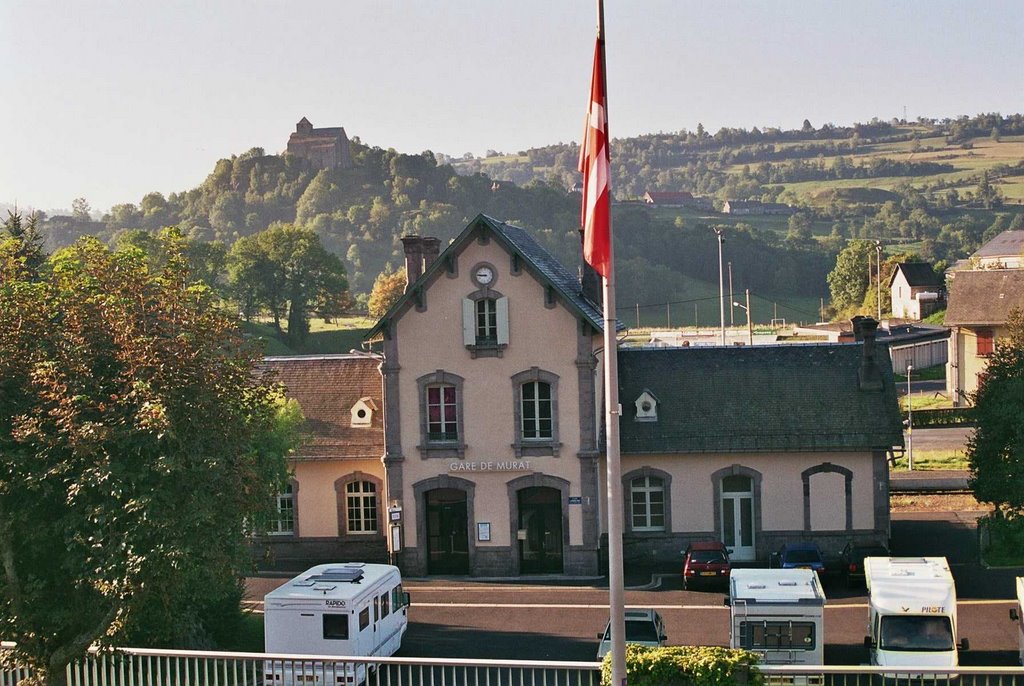
is being getting late and it is time to get to our destination. Go back to the D-921 to pick up after the D-926 to arrive, through the mountains of Cantal, Murat, a medieval town built in an amphitheater at the foot of three basaltic rocks, evidence of volcanic activity in this area. The city, preserved even in its smallest details, retains an exceptional architectural heritage

tion that has given the name "Stone Gate of the Mountains of Cantal.
has a perfect harmony: the streets and squares were laid out respecting the curves and the levels of a mountain town, and local materials were used which allowed a total and seamless integration of the city
within the landscape.
Surrounded by an exceptional nature and located within the Regional Park of the Volcanoes, Murat is characterized by slate roofs, traditional roofing material in the mountain villages. This stone is extracted from the rocks "Tuilières." We must provide some cookies shaped tile (Tuilières), made of egg white and almond. Are typical of this region y. .. Are truly delicious!. From the Town Hall Square, where also the Tourist Office, you can see, on top of a basaltic rocks, a giant Virgin, with the child in her arms. At night a soft light illuminates. As a small village, you can visit in daylight and illuminated at night. The temperature is great but, hotels and swimming pools are covered and not used, given the bad weather of August. However, saunas work wonders.
Murat has a weekly traditional market, the products of the country, worth a visit.
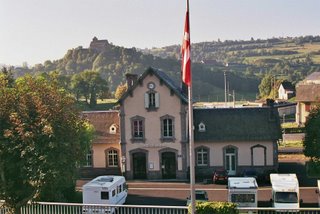
Second Day .- Murat - Puy Mary, 23 km. (D-3)
Puy Mary - Salers, 20 km. (D-680)
Salers - Murat, 43 (D-680) (D-3)
Murat Leaving the D-3 direction Puy Mary. These country roads are perfect, seem to be completed to build. The trees on each side, gives the sen sation
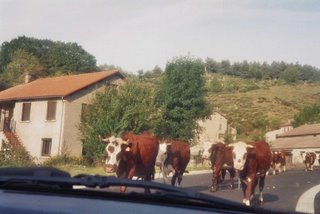
we're going through in a tunnel of vegetation.
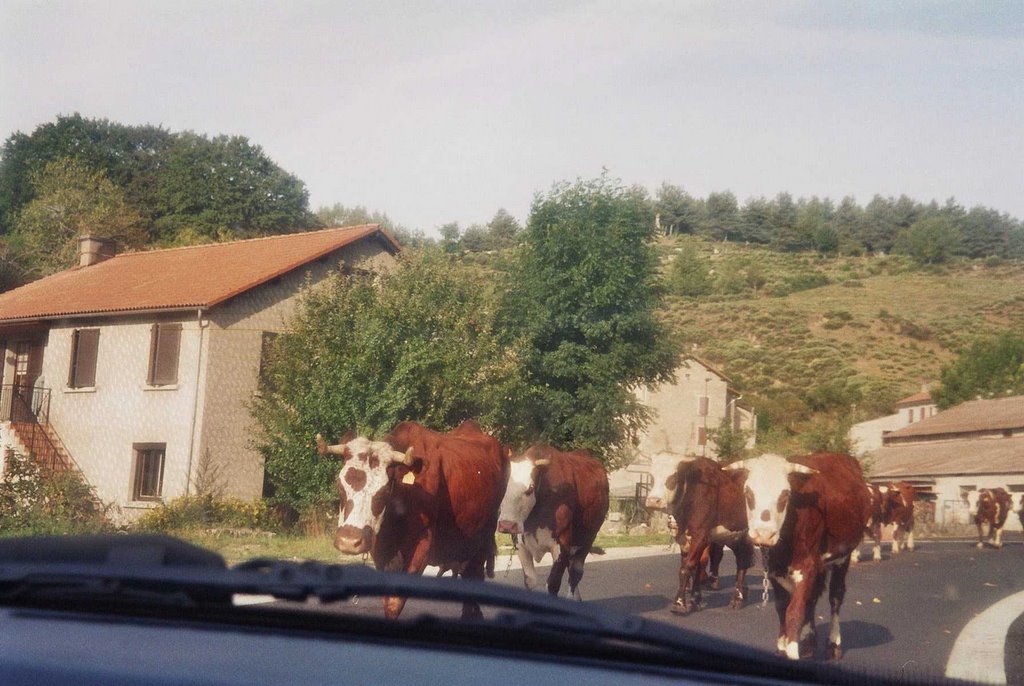
valleys follow one after another with a landscape very similar to Switzerland: Prados huge full of cows grazing. Cows are very important in this region: on the road to have preferential. Cows breed Salers ", very common in this area, look out for" sweet "that characterizes them.
or
 ago
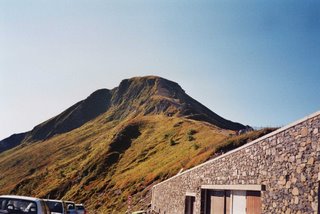
ago n ezcepcional day with a light and the air we breathe is so pure that you feel a strange being that can not be compared with anything.
The Puy-Mary is an extraordinary place, ranked among the major French National Enclaves. Has a exceptional landscape quality and fauna and rich flora. Is a unique place Cantal Massif, which is the largest volcanic mountain in Europe, with its 12 glacial valleys arranged in a star around the Puy Mary. With a maximum height of 1,857 m. this majestic mountain, thanks to its strategic location in the center of the Regional Natural Park of the Volcanoes of Auvergne, offers an unforgettable panorama. We are in the Col du Pas de Peyrol, to 1588 m.
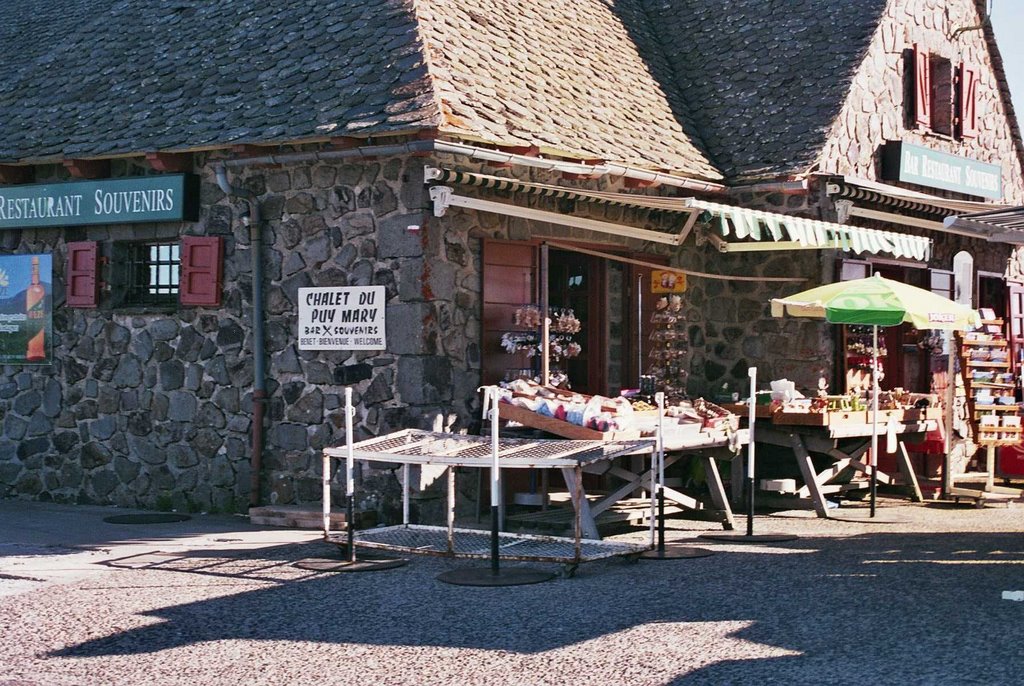
Here we find a souvenir shop "and typical regional food. They also sell bread. However, a medium round bread costs 5 € when, in any people, it costs less than half and is also handcrafted. There are many tour groups prepared to climb to the summit. The ascent, which is relatively easy, you can do in 45 minutes and the view from the summit, is exceptional. There is an orientation table with the signaling of all the mountains and craters that can be distinguished. To raise should go with hiking boots and a good jersey for cold weather.
back on the road. We take D-680, and we Salers, village classified as u no d
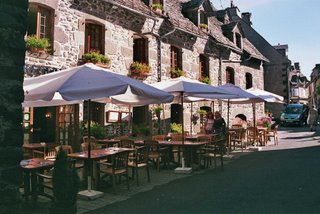
and the most beautiful in France.
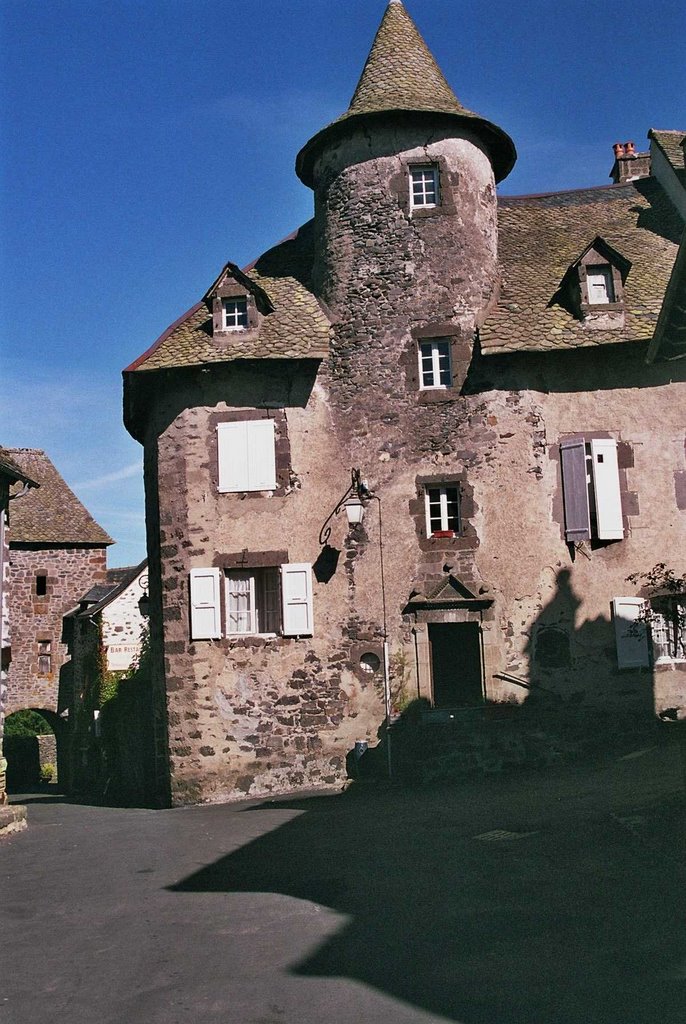
Salers is one of the wonders of l'Auvergne, both for its location and the archaic character of their village high. The remains will confer the essential character of a fifteenth-century villa. His church, in Gothic style, contains remarkable works of art. Strolling through narrow streets and admire its well-kept mansions is a feast for the eyes and senses. There are flowers everywhere. All the streets are very old. You can see houses with the inscription of the year to be built: 1,703. At the end of the village there are gardens, as a balcony, offering a magnificent panorama of the valley of the Barouze.
In Information and Tourism indicate that, to go to Tournemire, it is best to go by road to mountain to see the whole chain of mountains of Cantal.
Salers Leaving Fontages direction, we climbed the Col de St-Georges from which to contemplate a splendid view. St.-Perfect-de-Salers also worth a visit, but we do not stop. Since we left Murat, we are following the Route de Crete.
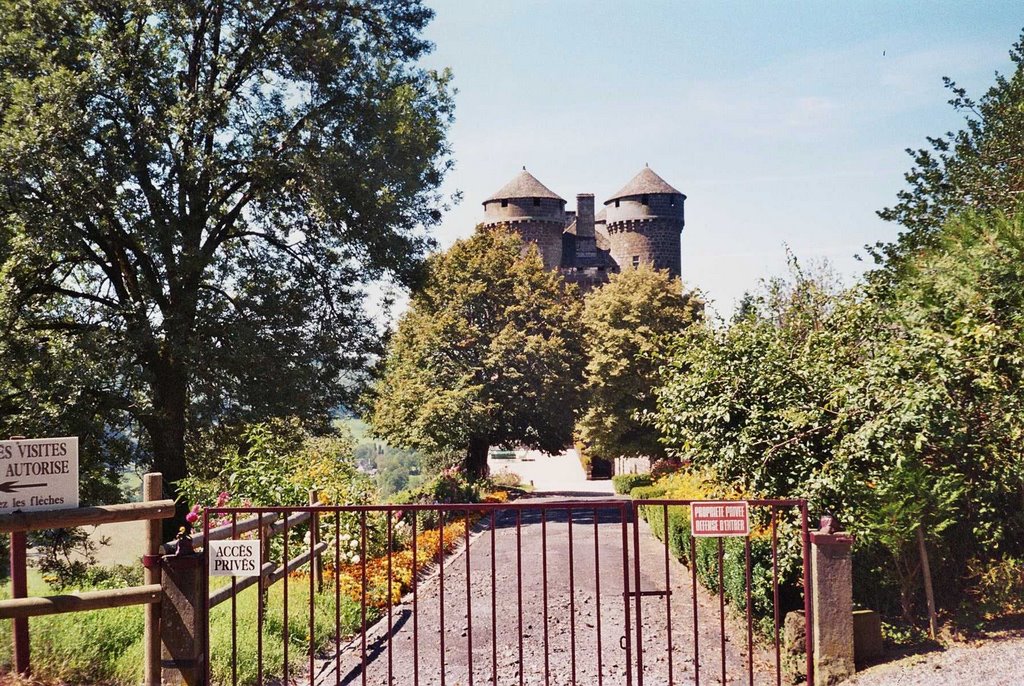
We reached Tournemire. Just before arriving, when we are in the top of the road, you can see the Castle d'Anjony with 4 defensive round towers and all its splendor. It looks so perfect that it seems that is newly built. I advise you take a picture from here because, to park the car should go to the end of the village (the entry above is only for residents) and the road, down a bit, makes the castle lost
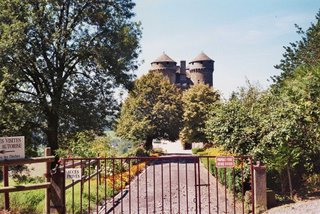
between the trees. At the end of town is the park for visitors.
The village, built on the flank of the mountain and overlooking the valley of the Doire, is ranked as one of the most beautiful villages in France. This town is important for the beauty of the buildings and especially for its castle which shows the style of military architecture de l'Haute Auvergne XV century. This castle is owned by d'Anjony family since its inception. The village has a main street that ends at the castle gates. You can visit, if only in the hours that are set for the visit. The panorama of the valley is breathtaking.
After eating and always mountain roads, we Lascelle and then we went to Vic-sur-Cere, in the heart of the valley of the Cere. This beautiful village, full of beautiful buildings that recall its glorious past. It is known since antiquity for the healing water springs. Possesses, at its ancient, stately homes such as The House of the Princes of Monaco, the fifteenth century, that of Coffinhal and former Hôtel des Juges d'Appeaux. In the highest part of town are the ruins of an ancient castle where you can enjoy a breathtaking view over the valley of the Cere. Walking along the promenade beside the river in the lower part of town, is a very pleasant experience since it is completely covered with grass and you can walk barefoot. On Sunday there is a market with an important collection of antique dealers in the region.
Murat
now return to the main road. We've been in love with the beauty of these valleys. We ended the day walking back down the steep and charming streets of Murat.
Third day .- Murat - Cheylade - Riom-es-Montagnes - Lac Roussillon - Castle of Val -
The Bourboule: 129 km.
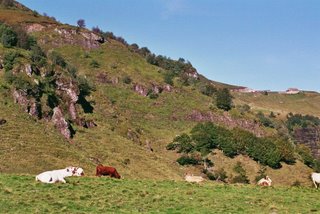
Murat Leaving early and beautiful weather, as always. We take the road D-3 direction Riom-es-Montagnes. Found some low fog and the thermometer drops to 17.5 º C. Weather forecast for Cantal is good weather, sunshine and high temperatures. The perfect road, as always. A few km. the detour we will Puy Mary. A few km. before reaching our destination we must be vigilant. Upon reaching Pierrebesse, left Take the D-62 that will lead us to Cheylade where an original XI century Romanesque church. His church interior hides a special and unique in France. The vaults and the sides of the ships were rebuilt in wood, covering it with 1,428 small oak coffers. In the eighteenth century, a painter decorations, one by one, without repeating himself once. They are polychrome motifs representing flowers, crowns, angels, an imal
, etc. Separated worth a bit of the route to visit her. Retrace our steps and follow the D-3 about 11 km. more.
We arrived
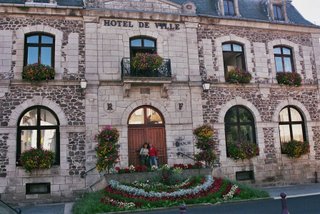
Riom-es-Montagnes, beautiful mountain town care even in the smallest detail. The City is like a flower garden. Do not miss the "Space Avèze, Gentian House" The gentian is the quintessential flower of Cantal. This plant has a root that can grow to over 1 m long. The "Gençanaires (gentian collectors) use a type of long fork with two prongs that sink into the ground to pry the handle to extract the precious from the root which produces a local snack. At the Maison de la Gentiane you can see everything about this plant, from collection to manufacture. Properties are explained and there is a guided tour, tasting and slide show on the ground of bottleneck.
We left the town by the D-36 that leads to Lake Roussillon. Located at 950 m. altitude, this lake has an area of \u200b\u200b5 acres of clear water from springs in the vicinity and offers a unique location

between herbera and forests.
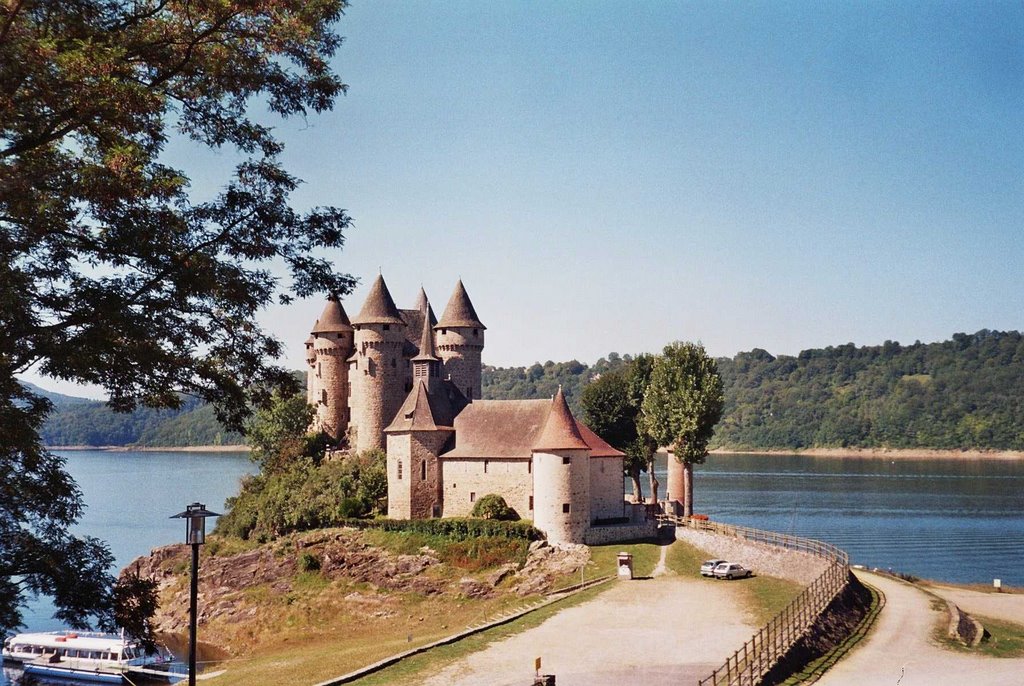
Go back to the D-3 to reach another wider road (D-922). We followed her up to Borg-les-Orgues. The walk along the river is beautiful but decided to go to Lanobre to see the castle that is on the lake. We put the indicator Ussel. We crossed the bridge over the dam reservoir, direction Lanobre y. .. we arrived at Chateau de Val, fortification of the Middle Ages, which has the peculiarity of being flooded, at its foundation, the dam water Bort-les-Orgues. Built on a rocky island in the lake of crystal clear water, the Château de Val seems to emerge majestically through the water like a fairy tale in question. The weather is splendid and the castle is reflected in the water giving the impression that what we are seeing is something unreal. Must be a highly visited place given the number of parking spaces there. After walking a b
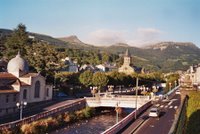
uen while we're eager to have stayed there all day. Already
we are in the Bourboule, the fate of the next two days. The Bourboule, 850 m. altitude, extends along the Dordogne marked by a dozen bridges, some painted pink. The city has preserved the beauty of the "Belle Epoque" spoiling all the old buildings and making them shine as if they were newly built. We admire Les Grans Thermes, Le Casino, L'Eglise Saint-Joseph, etc. This spa is famous for its water quality and purity of the air we breathe here. It is built around the sources and along the banks of the Dordogne, at the base of the massif du Sancy.
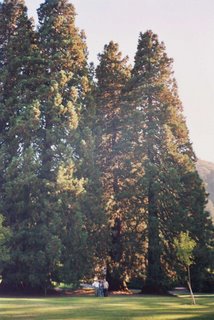
Fenestre Park, in the upper part of the city, is a huge park with more than century-old trees, a beautiful romantic gazebos and a number of birds that gives the feeling that you are far away from any populated area. The Spa Casino and put the finishing touch to this splendid villa has captivated us since the beginning. It is a recommended place in both summer and winter. In winter, this city is transformed into a ski resort very busy background. It is also an ideal place for mountain biking.
After dinner we walk around the Casino. Grandly lighted, inside is a great atmosphere. The restaurant is also very lively and in a nice room, a singer will delight fans of ballroom dancing.
Day Four: The Bourboule - Le Mont-Dore - Puy de Sancy - Lac Chambon - Lac Pavin
(do not put the miles because everything is very close)
a beautiful day dawns. The thermometer at 8 am, 18 º C. After a good breakfast we went to Mont-Dore, 6 km. La Bourboule. Because they are little more from 9 am, we have no problems leaving the car. Mont-Dore is similar to but lacks the Bourboule river. The Spa is inspired by Roman architecture and neo-Byzantine. Inside there are exceptional mosaics and frescoes. The columns give it an elegant decor. It was a busy place for the aristocracy and
rguesía bu late nineteenth century.
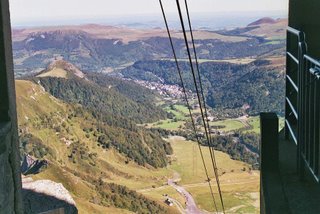
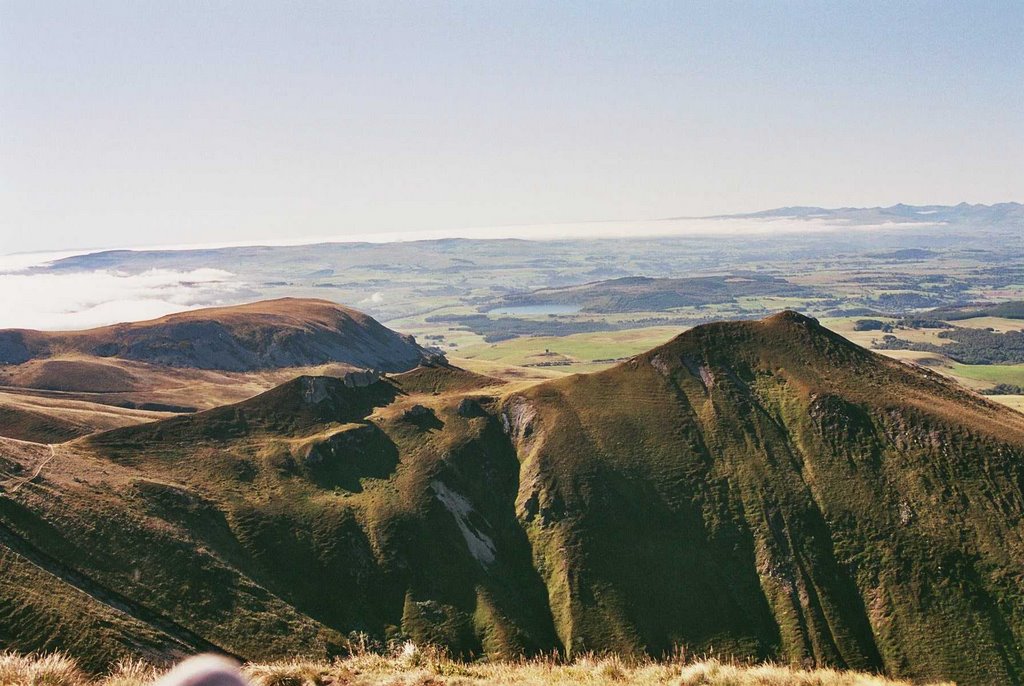
climbed 3 km. to reach the cable car Puy Sancy. Puy de Sancy is the highest point of the Massif Central, 1886 m. This solid sharp relief is the result of a flurry of Earth's crust that occurred around 4.5 million years and 250,000 years ago. Was the most colossal eruption that took the Auvergne. This massive volcano collapsed and rose and layers of volcanic rock covered an area of \u200b\u200b100 km2. Its base is dotted with crater lakes.
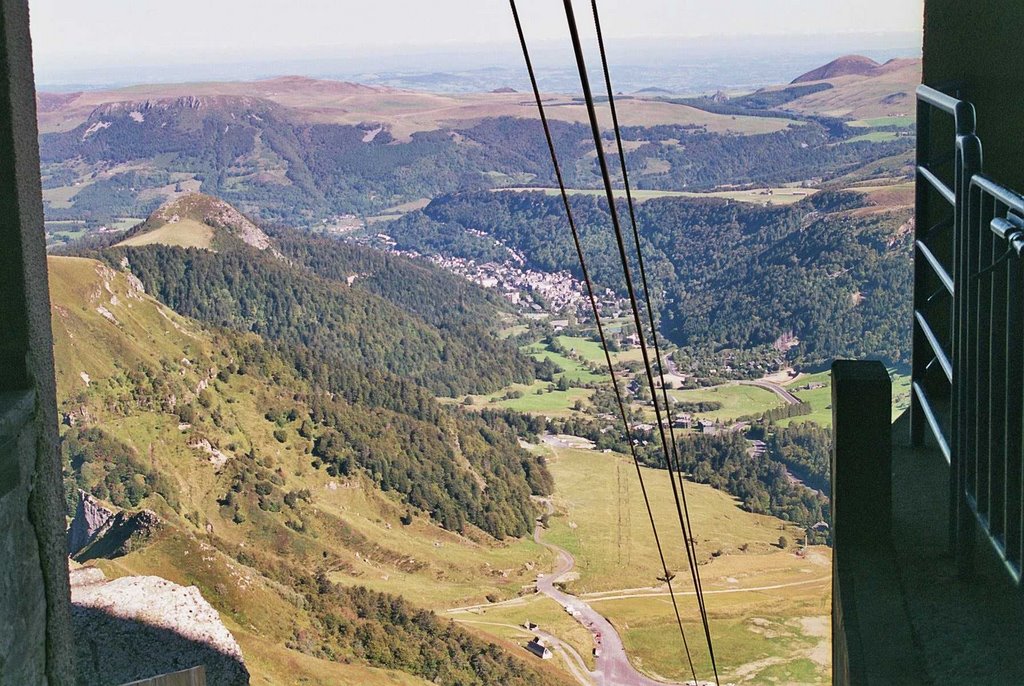
The cable car takes us to the summit after a climb of 20 minutes (7 € up and down). Makes a trip every 10 'to 17.30, with a stop of one hour between 12.30 and 13.30. Going down the funicular rising lasts even a ladder made of sheets of wood that leads to the summit. On each landing of the staircase is a beautiful reading of the landscape signs being contemplated from here
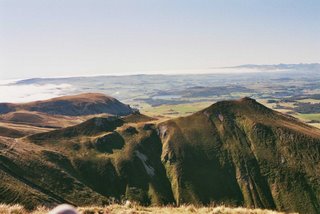
the point. Presents the volcanoes that can be view, the fauna and flora.
The scenery visible from the top is magnificent. But makes a splendid sun, Clermont-Ferrand above you can see a sea of \u200b\u200bclouds which means there is a vast difference from the northern to the southern part of the massif. While a party must be raining, we have a blazing sun. It seems that we are seeing the landscape from an airplane at high altitude. At the end are the flying ants (which have reached thousands) that made us decide to get off the summit and return to the flat to catch the cable car ride back to the departure station.
Back in Mont-Dore and take direction Besse. We climbed the Col de la Croix de Robert, for the D-36. Views splendid. On the left, saw the Lac Chambon. It is a normal lake, not crater, but very beautiful. It is located at 850 m. altitude in the valley of Chaudefour. Surrounded by trees and grass invited to lie on its shores to cool off the heat you're doing. It is a recreational lake for swimming and fishing in small boats.
back on the road. We passed Murol. Do not stop, but I think we've lost a beautiful village. We found the sign that indicates Lac Pavin and advisable to leave the car there. We do but after walking a little way to get the car back and we realize that the lake is very isolated and, at this time, no tourists.
parked in a huge plaza filled with fir trees, with benches and tables made from tree trunks to eat. It is an area of \u200b\u200b"picnic" charming. From this area, the Lac Pavin is barely visible, as the vegetation is very thick. After eating the sandwiches that he had brought with him, cool and comfortable return to the bottom where a sign says: "Lac Pavin. Comerce. We can leave the car without any problem beside the restaurant. However, in summer should not be relied upon, must be "butt."
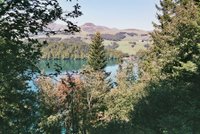
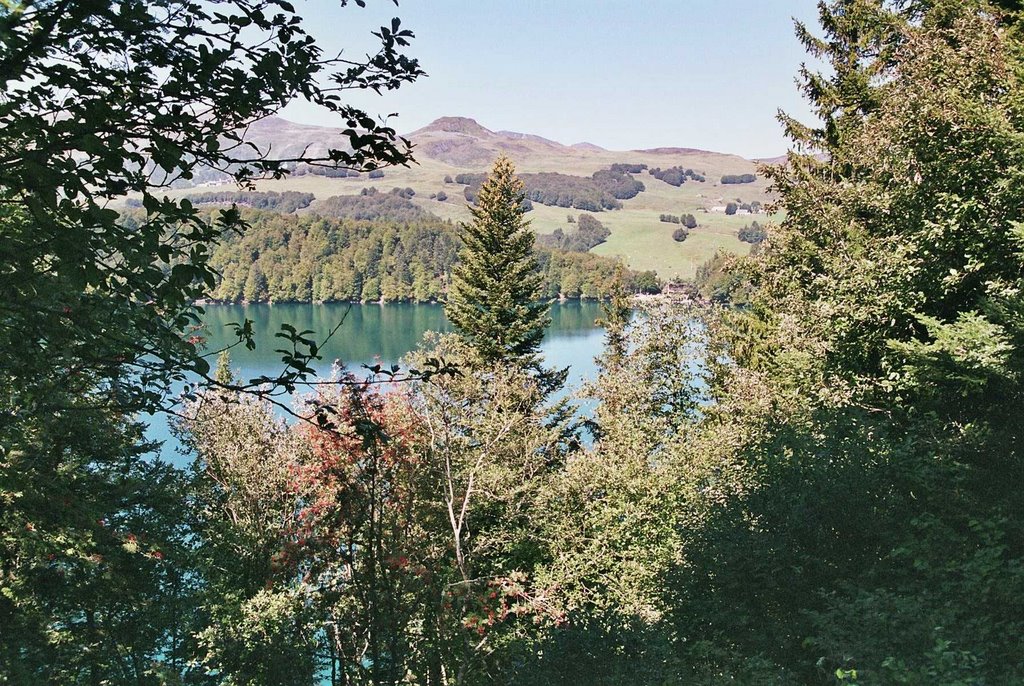
After walking a few steps we were stunned: a crater 900m. in diameter, surrounded by fir trees, and filled to the brim with green water, clear, with a depth of 97 m. Surrounded by the forest and surrounded by a silent admosfera, one can understand the myriad legends arising from its disturbing background. Trying to take photographs capture the intense green of these deep to
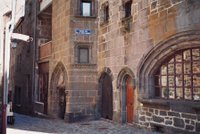
guides, but I'm sure there will not be achieved.
We leave this idyllic spot and return on our steps to Besse. We visited the medieval Bourg. You enter through the door of a huge well-preserved wall. This medieval town still keeps alive the memory disturbing one of the queens of France's most troubled: Queen Margot. Its narrow cobbled streets you can see his house, chapel, and any other agency. Admiring its buildings, squares and fountains, it seems that time has stopped in this beautiful town.
Go back to the D-36 to return to Mont-Dore. We passed through Le Verdier and Le Rocher de l'Aguila, splendid full of grazing cows. We ended the busy day sitting in the middle of the beauty and freshness Fenestre Park, surrounded by redwoods, in the same town of La Bourboule, our fate from yesterday and today.
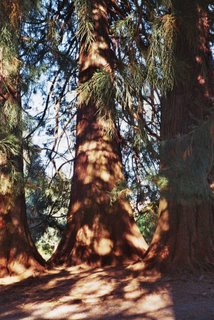
Fifth day: The Bourboule - Saint-Nectaire, 43 km. (D-996)
Saint-Nectaire - Puy-de-Dôme - Orcival - Saint-Nectaire, approx. 90 km. (D-5), (N-89), (D-941)
soon in the morning, we left to head the Bourboule Saint-Nectaire. We climbed the Col de la Croix Mourand a splendid time. The "Weather" this morning on TV has a big sun throughout the area. The perfect road that skirts the mountain offers a beautiful landscape of volcanoes and valleys without interruption. The scenery is bucolic. We passed again by the Lac Chambon (this time by the N-996). In Le Marais is a beautiful camping by the lake. We passed Murol and admire its beautiful and ancient Chateau Fort "at the top of the mountain. We arrived in Saint-Nectaire. We left the luggage at the hotel and then we go to Puy-de-Dôme, from Murol again and make a photo of the castle, but not visited. On leaving the village take the D-5 to Clermont-Ferrand. The Highways
 c
c is full of farms offering cheeses with denomination of origin.
After we went to the N-89 to finish in the D-941. We arrived at the foot of the Puy-de-Dôme. We stopped at the booth and pay € 4.50, which is the price to go up a car with passengers inside. The climb is steep and quite long (I q ue
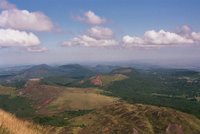
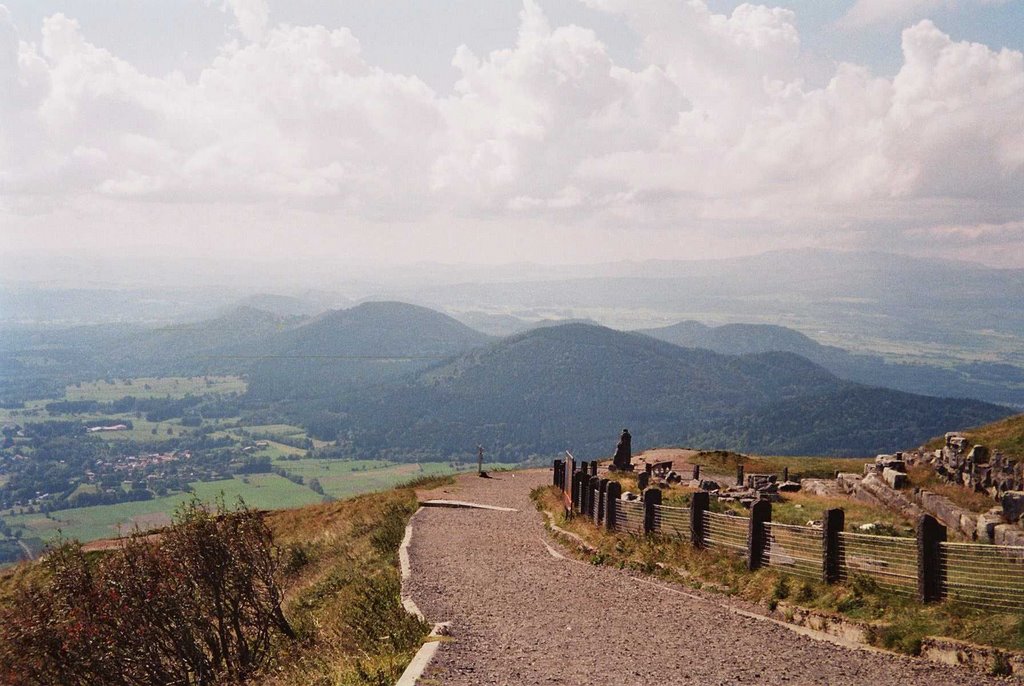
could appreciate the components of the Tour de France when it created a sprint in the top) When you reach the summit (1,465 m.) the scenery is splendid. It may be viewed more than 100 volcanoes from this vantage point. On a clear day you can even see Mont Blanc is situated over 400 km. away. At the top you can see and visit the ruins of the Temple of Mercury. The Puy-de-Dôme was a place of worship more in antiquity, from the top of Mercury, the winged god, took off. This summit also worried a lot, in the Middle Ages believed that witches held their covens there. Since the scientific Guettarda
defined it as a 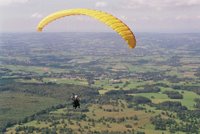
volcano, fascinating to all those who only saw in this an isolated mountain summit.
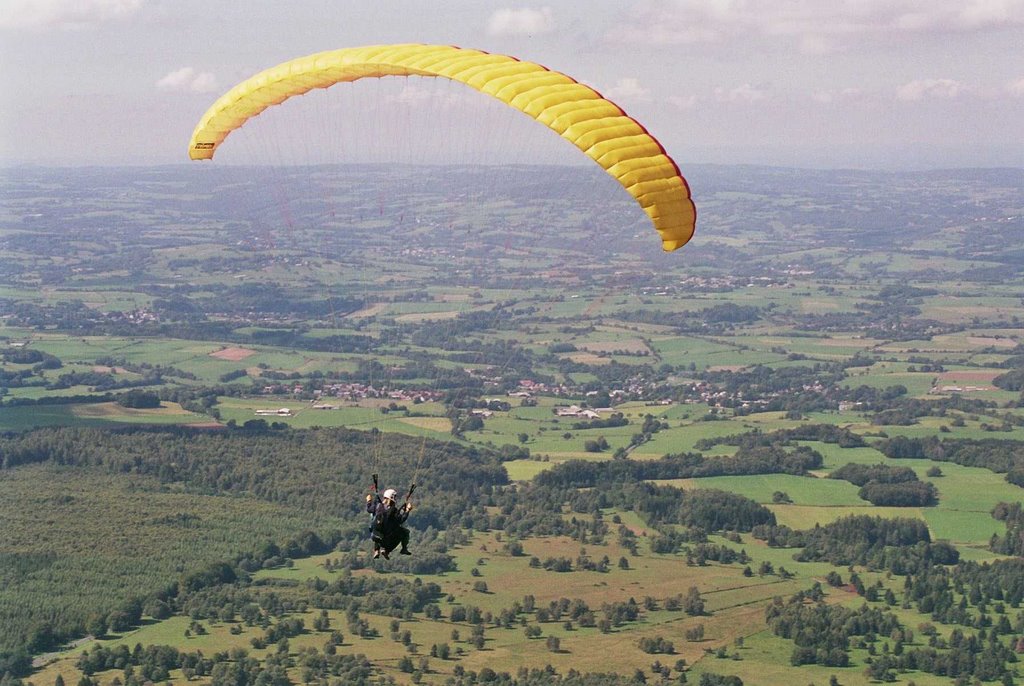
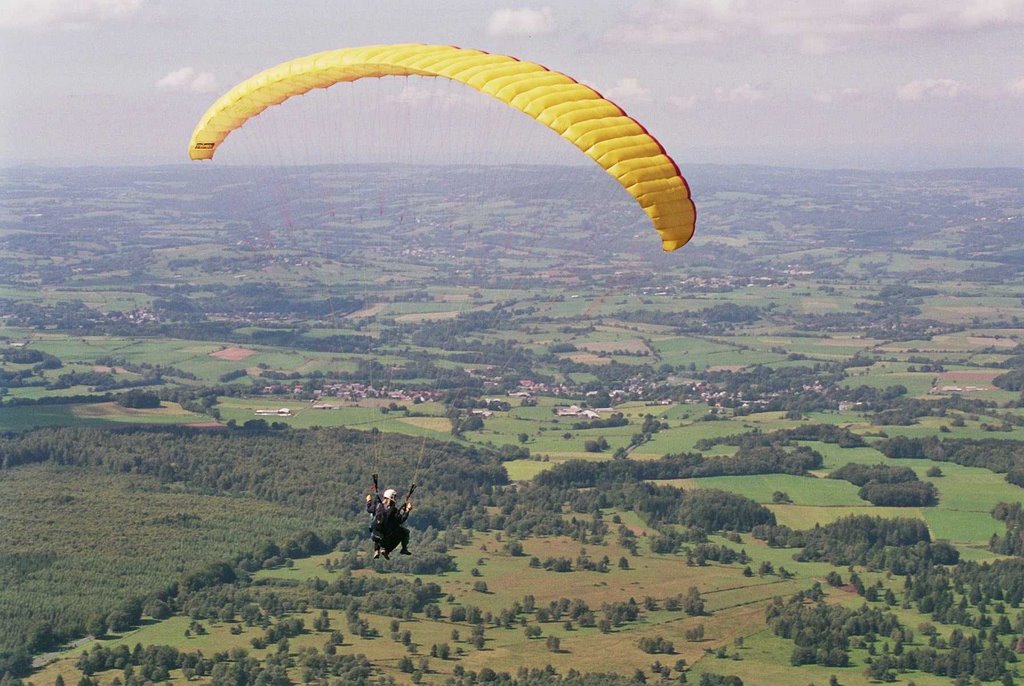
The summit of Puy-de-Dôme is a beloved place for fans of hang gliding and paragliding. The place is gorgeous and can take off whatever the wind direction, something unique in Europe. Offers slopes from 400 to 500 m. Leaving
Puy-de-Dôme wonder and, with stifling heat, we headed Orcival. First we visited the Basilica of Notre-Dame. This important Romanesque church, a former Benedictine abbey church was built in the twelfth century by monks from Aba
day of the Chaise-Dieu.
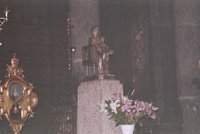
is one of the best preserved churches of France. Romanesque houses the only virgin in the region, carved from walnut and covered with sheets silver. Every August 15, at noon, a ray of sun lights his face. This old p
eregrinación of Orcival attracts every year thousands of faithful.
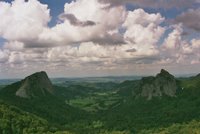
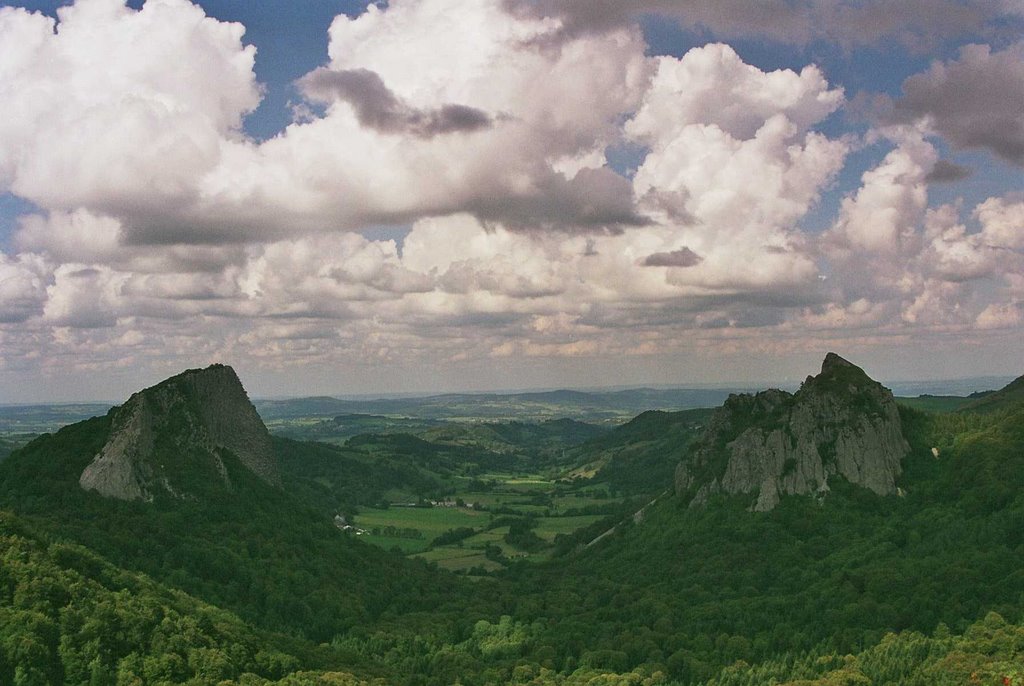
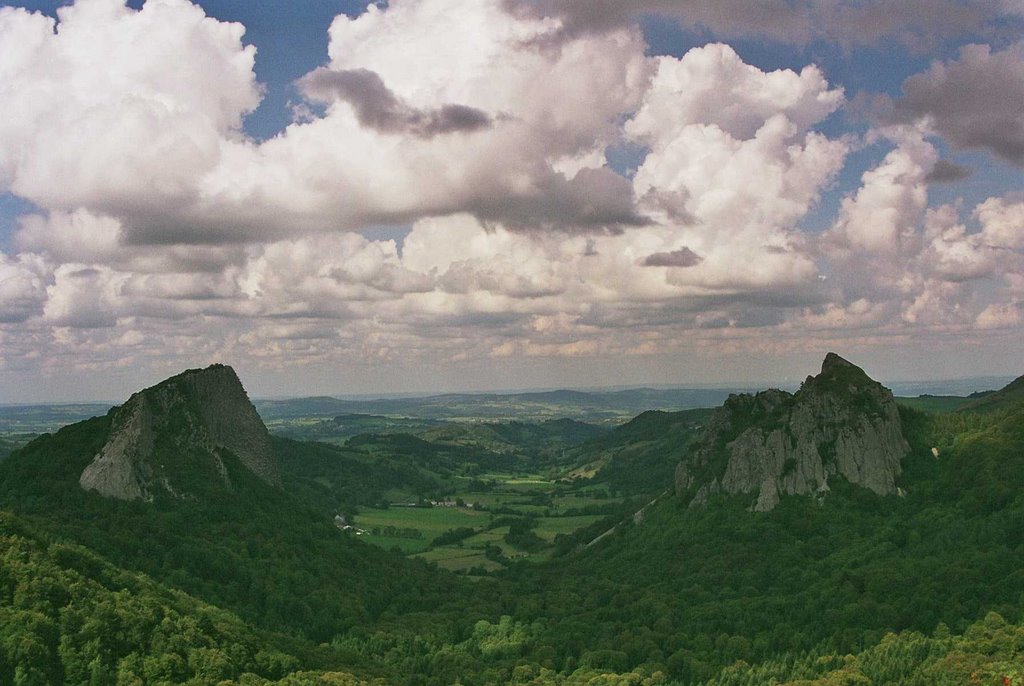
A few miles can admire and Sanadoire Tuilière rocks, one in front of the other, the starting point for many hikers, as there are plenty of well marked paths to admire the grandeur of these mountains. Only a few yards down the Lac de Guery found in its banks just chilled heat we've been and relax admiring the scenery.
We are already in Saint-Nectaire. After parking the car we went to the Maison Saint-Nectaire, to show us how the cheese with denomination of origin. They are about to close. The last visit to see the production was at 5.30 (now it is 6). In the store that precedes the visit can only buy cheese and other products in the region. Saint-Nectaire
is best known for its cuisine and spas. Neo-Renaissance Canned baths. Also Jonàs Grotto, a cave inhabited since prehistoric times. Leaving see the indicator of "The Petrified Sources," and there we go. Before arriving, always in the lower city, we find a very modern Thalassotherapy Center. Water jets are even abroad, which will delight any dog \u200b\u200bthat passes the "scary" cooling of the high temperatures we are experiencing.

few feet below are the sources. Entered. We give a laminated sheet showing the different units that make up the grotto. Without a guide, and after paying € 4 per person, and we visited "our air." The interesting thing is that water seeps through the rock and falls at a rate of 35 liters per minute, is hot (from 10 º C to 50 ° C) and rich in bicarbonates and minerals. Essential to visit the study Low-reliefs and sculptures. Source facilities have a height of 14 m. With the constant drip in the works in limestone for a period ranging from 6 to 20 months to the end of the process gives the impression that they are sculptures and bas-reliefs in ivory. This artwork so sophisticated, it has passed from father to son for 7 generations. It is worth visiting this place. It's different and interesting.
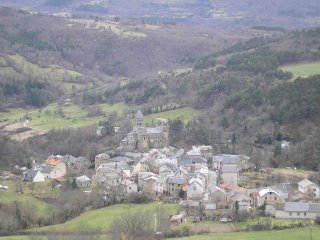
After dinner we went to Saint-Nectaire le Haut to see the church. This beautiful church stands in a great location: a green valley at the foot of the massif of Sanzy. Of modest size, its proportions perfect harmony has earned a place among the churches important. It is built in anthracite, a hard volcanic rock. The altar and the objects that are exposed in the interior are of great value.
The town is very small. Some very old houses, with garden, and little else. What most strikes me is the manner in which the City Council to organize for emergencies. On the roof there is a huge speaker beside the door, a sign explains: 1 siren, it's an accident. 2 sirens, fire in the village. 3 sirens, fire nearby. I realize that these people, by less sophisticated, organized sometimes better than larger cities.
Sixth Day: Saint-Nectaire - Le Puy-en-Velay, 180 km. (D-996) (A-75) (N-102), 180 km.
esses hotel owner we have been called by the name of Reus. I explain that Catalans should have ancestors. No one had mentioned earlier.
We take the car and go for the D-996 to bypass found in Saint-Floret (about 15 km.). Disappointment. Although one of the "most beautiful villages of France" is the first time I have not met expectations. In a tiny plaza is the Church, City Hall and several old houses. The set is nice but so small that we can not take a photo for lack of space.
Go back to the D-996 to Issoire. Here we take the A-75 direction Brioude. When we find a detour from the highway must watch: first going to Saint-Fluor and the other Brioude and Puy-en-Velay. In the N-102, about 5 km. after passing the diversion of Brioude,
 find a detour to go
 Vieille-Brioude. If you have time, worth enjoying for a while and
n this town. We
Puy-en-Velay. Once ensconced in the Hotel, you have to put on shoes, because the streets are all "stoned" and to see the city well enough and have to walk all are ups, downs and lots of stairs.
start by going to Information and Tourism, Place du Clauzel. There we were given a booklet in English with recommended tours not to miss anything in this wonderful city.
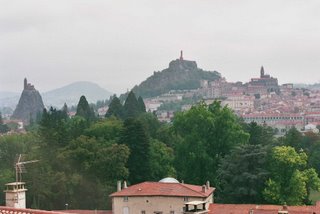
Le Puy-en-Velay is the city's "Occitan" in the Auvergne. The color of the roofs, the narrow streets recall, each time, the neighboring Italy. In the Renaissance it was a prosperous city, for this circumstance the palaces and manor houses are lavished everywhere. It is without doubt one of the sites most extra ordinary
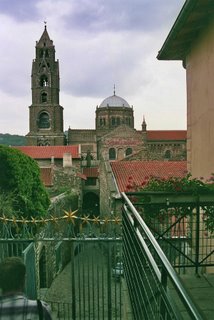
France.
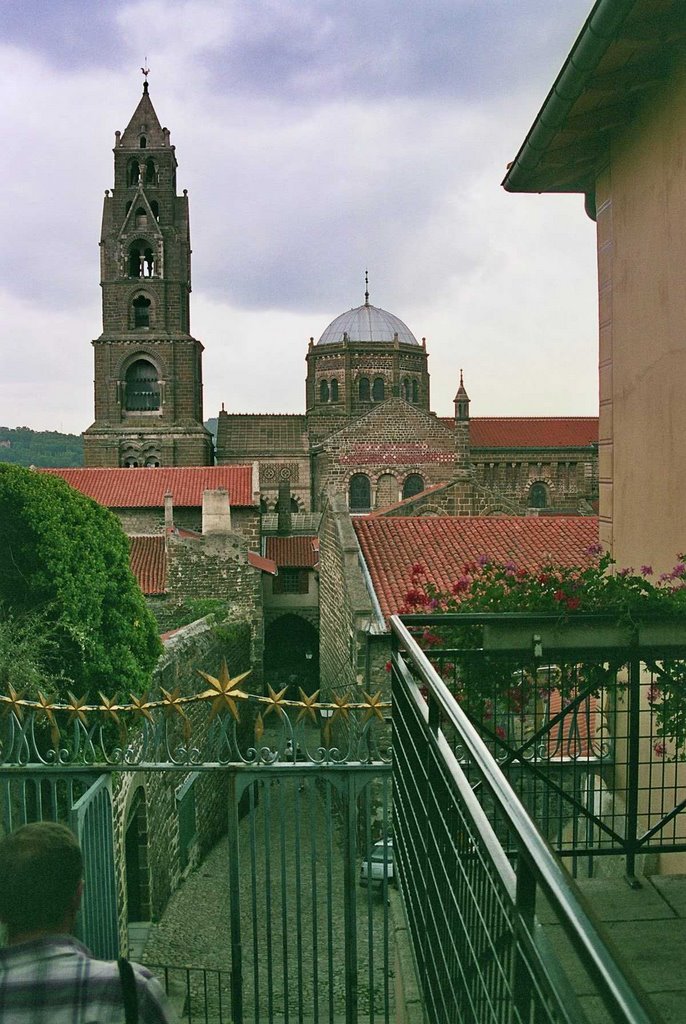
say, only to see this city worth a trip to Auvergne. The Rue des Tables " and after climbing 134 steps, one arrives at the Cathedral of Notre-Dame, declared World Heritage by UNESCO. Preserved, for the altar, a Black Virgin was a gift from King Louis IX (St. Louis) after his return from the Last Crusade. It was a statue of cedar that perhaps came from Egypt. Inside the Cathedral can also be the "Stone of the Apparitions." It is a black stone slab, according to legend, if you express a wish and touch her, possibly this wish come true. It is a very ancient legend of the beginning of our era. This volcanic table has the old name of "Pierre de Fièvre".
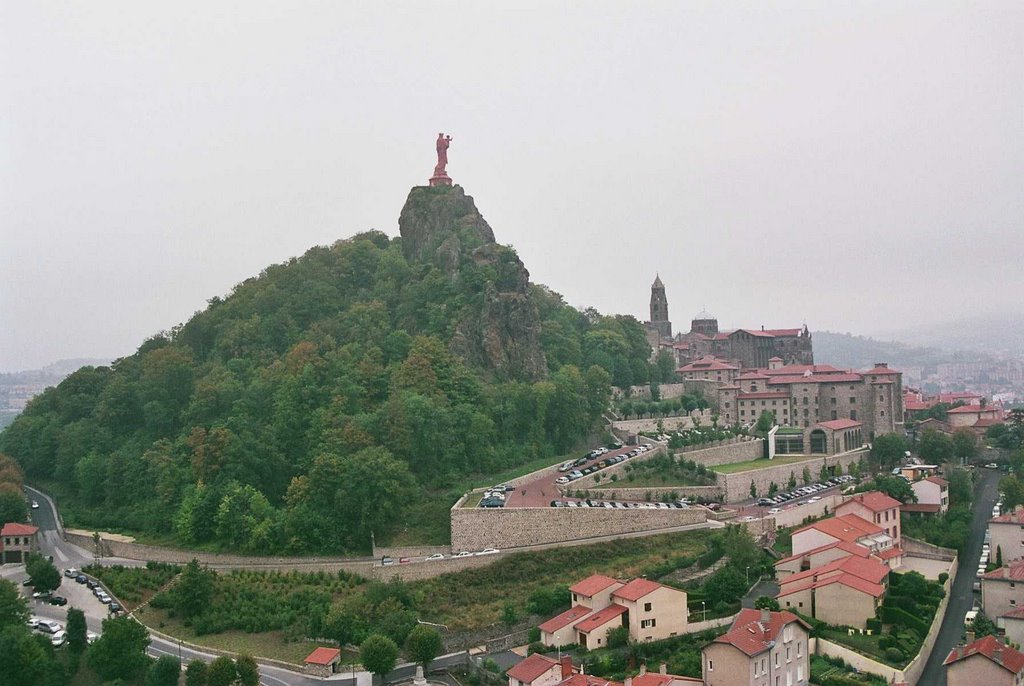
This city seems rather unfinished work of an architect giant. Promontories huge statues at the top seem to mark the appearance of this beautiful city. In the heart of the historic area, just a few minutes walk from the monumental statue of "Notre-Dame de France", is a technical feat. Built in 1860, on top of a huge rock, was created with the molten metal barrels of 213 won to the Russians in the Crimean War and offered by Napoleon III to model this image. Located at the summit of Le Rocher Corneille, ancient citadel, measures 16 meters (22.70 meters to the base) and weighs 835 tons. On the night of May 31, d
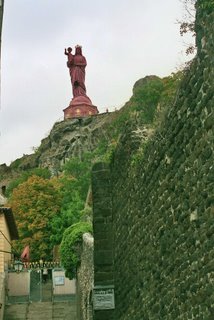
ed of the Visitation, a procession with torches to the top of the Rocher Corneille. August 14 also goes in procession to honor the Virgin. The climb is very nice because the shade of the trees and the scent of flowers means that, without realizing it, you are at the foot of the beautiful virgin.
The Emperor Charlemagne and 13 Kings of France came from a pilgrimage to Le Puy. The last royal visit was in 1533. François I came to Le Puy after the defeat of Pavia.
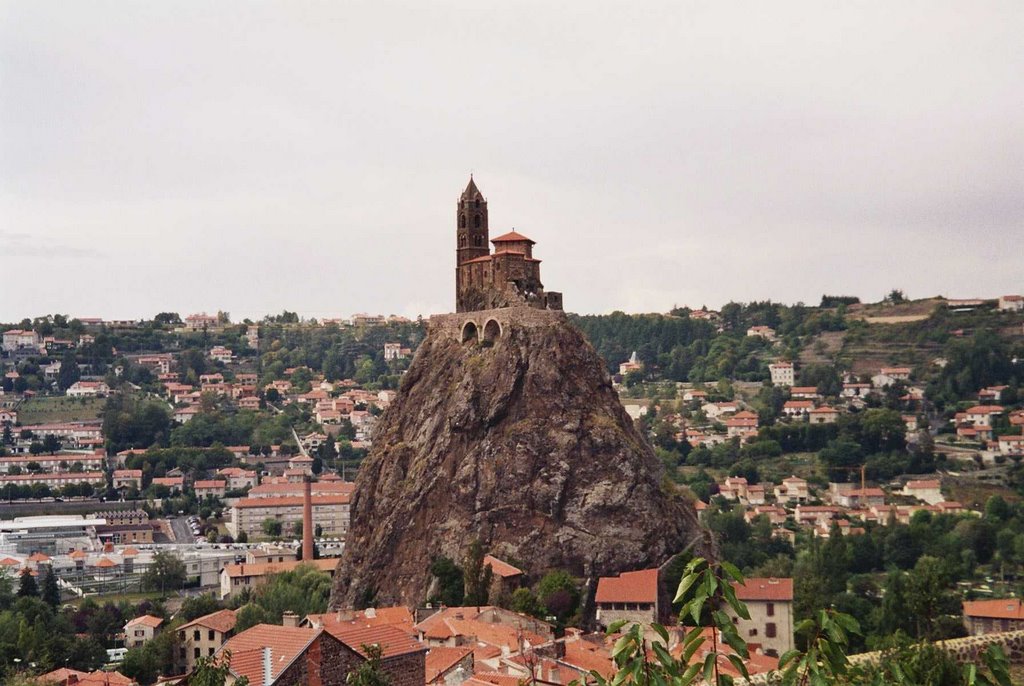
A little to the left, perched on a basalt rock another majestic and gigantic building attracts the attention of visitors. Is "Saint-Michel d'Aiguilhe". En la cima de una chimenea de volcán, de 82 m. de altura, socavada por la erosión, se alza una capilla del siglo X. Desde el año 951 está erigida a Saint-Michel. En 1955, durante las obras de restauración, se descubrieron las piezas del tesoro, entre ellas un magnífico Cristo que parece ser de una escuela española del siglo X.
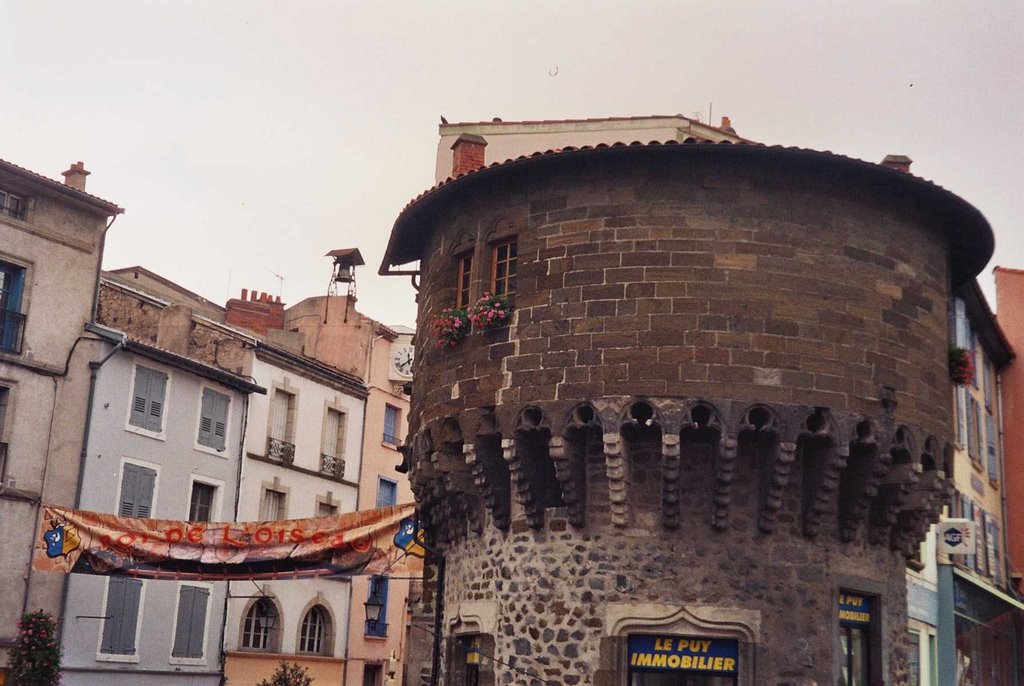
Cada año, alrededor de la segunda semana de Septiembre, La Puy-en-Velay se transporta de nuevo a la época renacentista y se renueva con una tradición popular: Las Fiestas Renaissance du Roi de l'Oiseau. Estas fiestas se crearon en el año 1986, aunque su origen se remonta a una tradición más antigua y reune a gentes de todas las procedencias. There are parades, medieval market, street performances and gorgeous costumes. You can also try your luck competition for the coveted title of Roi de l'Oiseau (King Bird). If you can be there at this time, I'm sure it will be for you all a memorable experience.
Seventh Day: Le Puy-en-Velay - Barcelona, \u200b\u200b528 km.
You wake up early. We need to go to Saint-Joseph-de-Bon-Espoir. It is located off of Puy-en-Velay, in Espaly. Come along smoothly, and we left the car yesterday in the underground parking CANDELARICA plaza next to the hotel, to have a well deserved rest. We went through the upper town, the old royal entrance of the city. You can still see part of
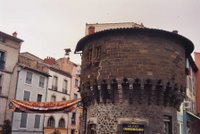
XIV century tower. This tower was half-destroyed in 1850 to widen the street. We
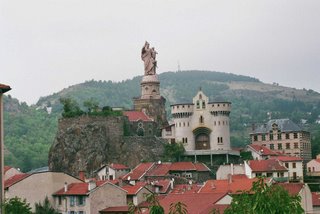
Saint-Joseph-de-Bon-Espoir. The first glimpse we have makes us gasp. A huge statue of 22.40 m. high dominates the top of the basilica. It was the work of Brother André Besqueut and its implementation was approved by Pope Pius X. The inauguration and blessing took place on April 11, 1910. Inside there to visit the chapel which is carved into the rock, and a diorama devoted to the life of Saint-Joseph.
The time has come "back home." It's been a wonderful journey. The Auvergne is a country of open spaces, fresh air, nice people and where .. Eating is a delight! Auvergne is rich in unique landscapes for its past and its legacies. We lacked time. We visited only a part. We have made beautiful places such as L'Allier and much of l'Haute-Loire. Come back another time. Auvergne is not only a beautiful destination for a trip it is ... Unforgettable!
If you need information, not hesitate to enter:
http://www.franceguide.com/ is the website of La Maison de la France and you will find plenty of ideas and suggestions to travel peacefully to the neighboring country.
If you liked this review of the trip, type 1 or 2 lines in the "comments" you will find a little lower. These comments give me encouragement to continue writing.
As always, a hug and ... You enjoy with your "Travel by car!"
Magda

 n endearing crib.
 n endearing crib.
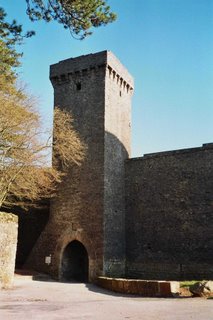

 reminds a little "La Cité" · of Carcassonne.
  reminds a little "La Cité" · of Carcassonne.
  and Bon Secours.
 erd o. Leaving
  Pezar the crossing, the river is caught between cliffs 400 to 500 meters high you.
  Pezar the crossing, the river is caught between cliffs 400 to 500 meters high you.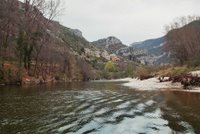
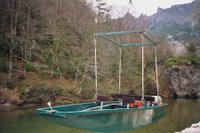 c ollective in mid-April.
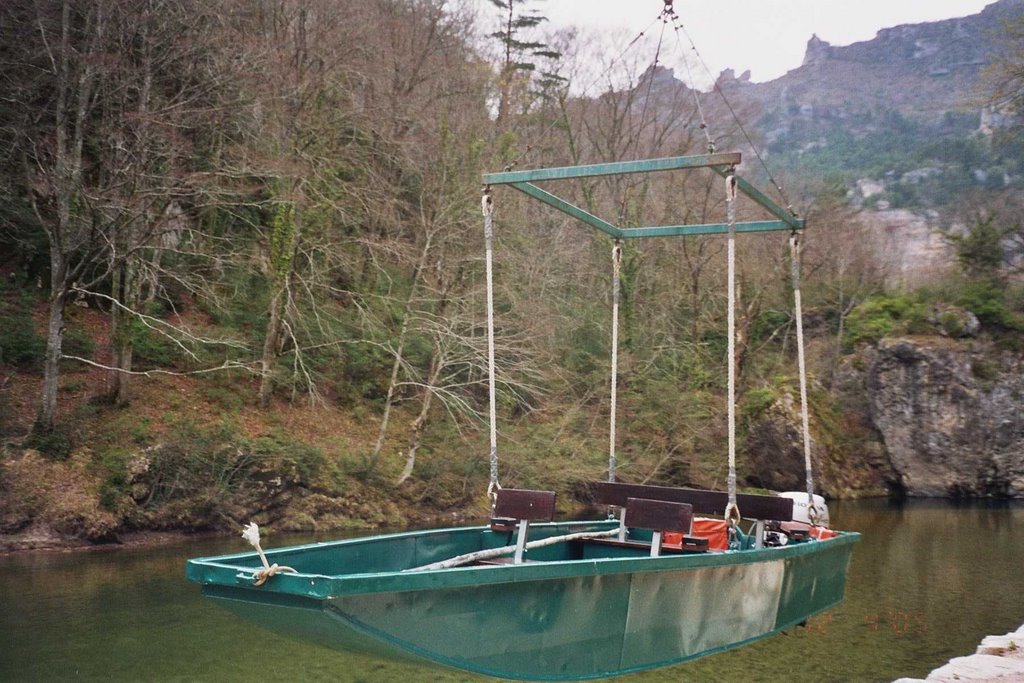 c ollective in mid-April.
  Orges from 400 m. high. Only
 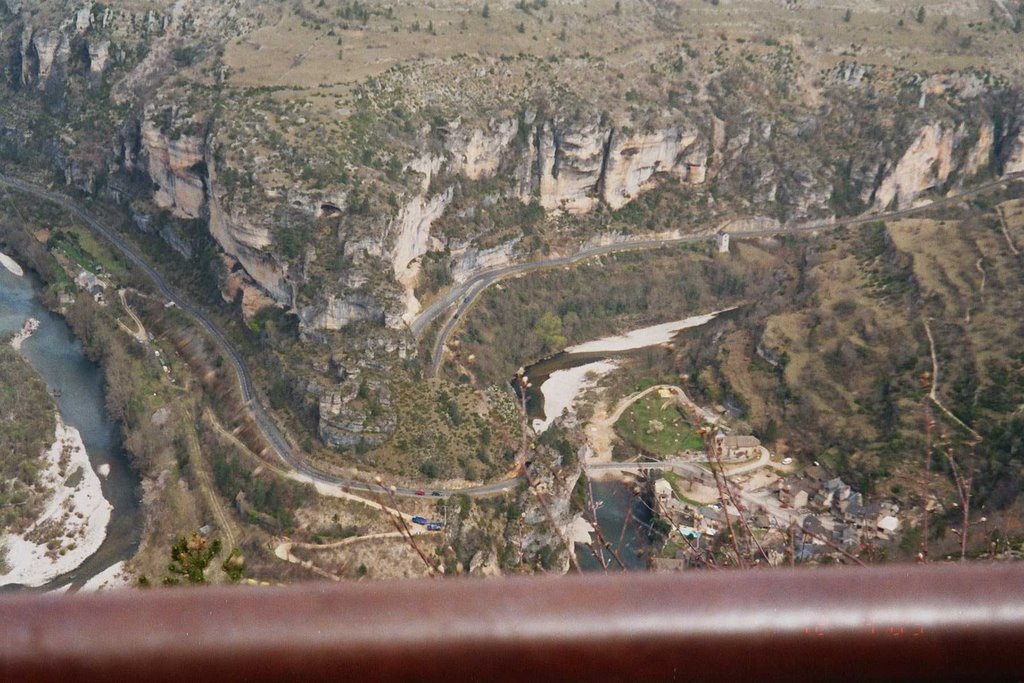 Orges from 400 m. high. Only
  hour) or Subienda ea a small train that goes around this wonderful place.
  hour) or Subienda ea a small train that goes around this wonderful place.


 The Casino is also spectacular but inside is low class. It has given more importance to the gambling rooms that elegantly decorated. It has nothing to do with luxury and sobriety of Aix-Les-Bains. Climbing
  Yvoire is one of the most beautiful villages of historic Savoia. Emana simple and quiet charm. In winter, when the sky is gray and cold temperature, Yvoire emerges from the mists of the lake with all its splendor. It is a charming medieval town. Narrow streets, cobblestone, balconies with flowers, ancient houses and protruding from all sides, the magnificent golden bell. In the early fourteenth century, the military architect of King Amadeus V the Great, Count of Savoy, made this beautiful town a "burg" fortress. In the sixteenth century suffered several attacks, most of its strategic location helps it to survive its enemies. Today is a tourist resort and where the visitor is captivated from the first moment of beauty of this village on the very edge of Lake Lemans. For the hardcore loyal fans, is his "favorite people" par excellence and the place where your dreams come true.


 From the Quai d'Isière, walk along the river, you can admire the Bastille, situated on top of a mountain on the opposite bank. A cable car as Easter eggs make the trip from the river to the fortress. When it is windy, normal in this region, the cabins are moved enough. From above, the view is spectacular: you can see the whole city and the first contact with the challenging mountains of the pre-Alps. You can visit an exhibition of old photos, giant black and white (some like wall), the time of resistance.


 continue in Aix-les-Bains. We take the car and we go around the Lac du Bourget which just arrived, and has captivated us. It is the largest natural lake in France, as an inland sea: 18 km. long and 3.5 km. wide. It is 85 m. average depth, but between Hautecombe Grésine and the depth reaches 147 m. Has 3 rivers: the Leysse him and he Sierroz Tillet. The birth of the lake dates back to 19,000 years ago after the glaciers receded slowly in this area. The first settlers began to inhabit about 3,500 years ago.
 Inside, the chapels happen with mausoleums, all beautiful. The roofs are made of finely crafted wood. Great "vitraills" unheard compositions. The toilets are located on the bottom, near the edge of the lake, and look like a small chapel.

 first passed through Annecy Le Vieux, a village located Annecy larger than the edge of the lake. Later at Menthon-Saint-Bernard, between two mountains and near the lake. Duingt Castle, situated in a sort of peninsula, is a wonderful work of art.




 vertigo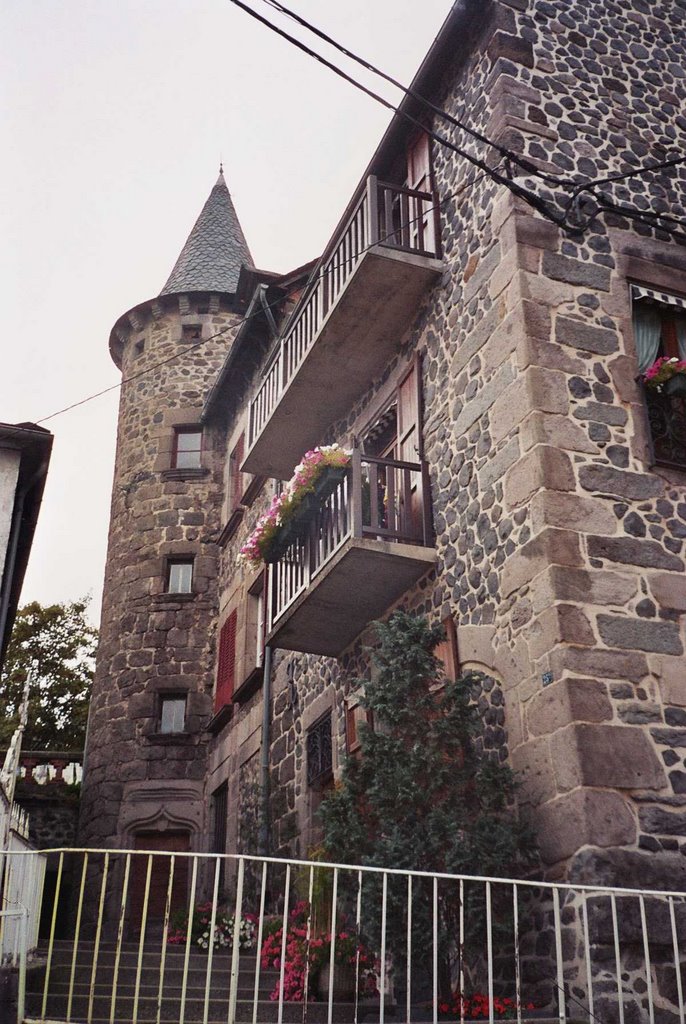
 ago
ago 




 c
c 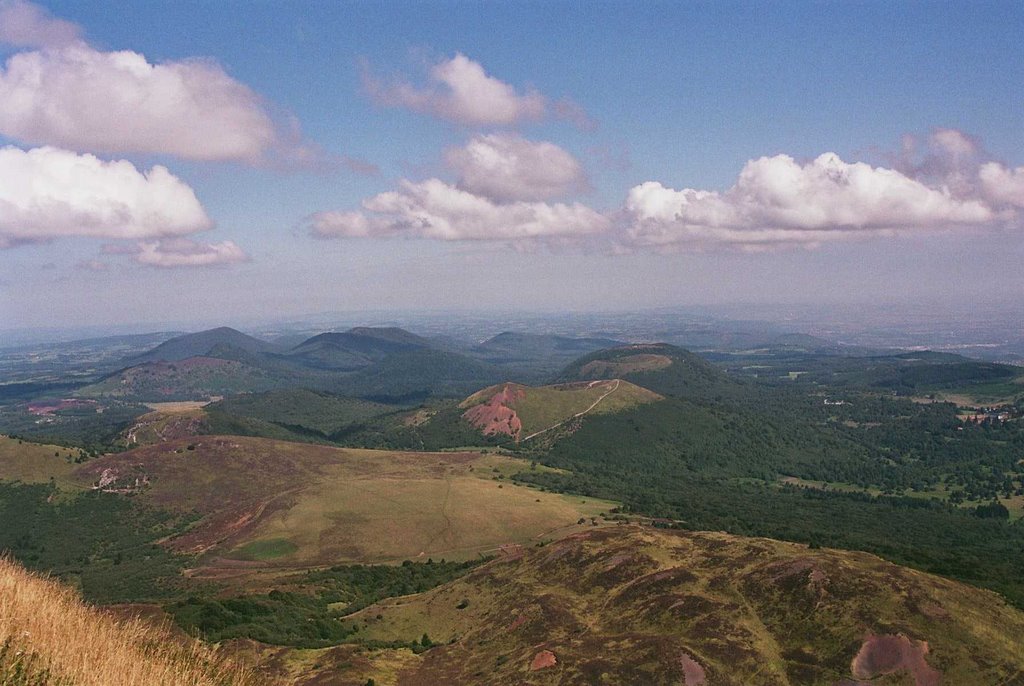


 Sixth Day: Saint-Nectaire - Le Puy-en-Velay, 180 km. (D-996) (A-75) (N-102), 180 km.
  find a detour to go